
Wasp Problems? Let The Professional’s Handle It!
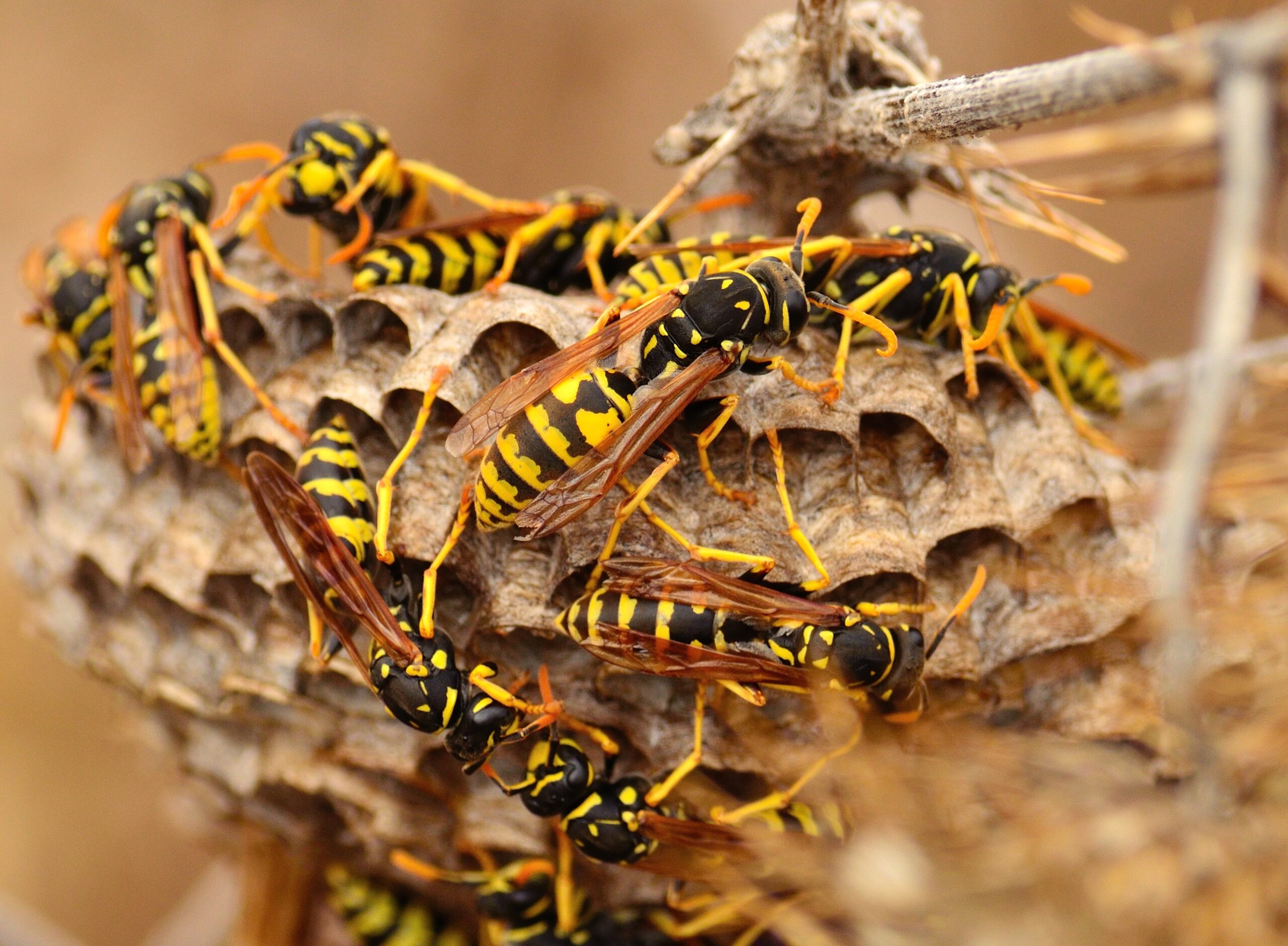
Don’t let the wasps sting this Summer!
Wasps are among the most misunderstood and often feared insects in the natural world. Known for their painful stings and aggressive behavior when threatened, they are frequently viewed as pests that must be eliminated. However, wasps play an important ecological role, acting as both predators and pollinators. Despite their benefits, their proximity to human dwellings can pose significant risks, making effective pest control strategies essential. Understanding wasp behavior, the dangers they present, and the methods used to control them provides a comprehensive view of why professional and targeted pest control is often the safest and most effective treatment.
Wasps belong to the order Hymenoptera, which also includes bees and ants. Unlike bees, which are typically fuzzy and primarily feed on nectar, wasps tend to have smooth bodies and are often more aggressive. There are two main categories of wasps: solitary and social. Solitary wasps live and operate alone, rarely posing a threat to humans unless directly provoked. Social wasps, such as yellowjackets and hornets, live in colonies that can range from a few dozen to thousands of individuals. These social species are the ones most commonly associated with pest problems because they build nests in areas close to human activity, including attics, wall cavities, trees, and underground burrows.
The danger posed by wasps lies primarily in their ability to sting multiple times. Unlike bees, which lose their stinger after attacking, wasps can sting repeatedly. This makes them particularly hazardous, especially for individuals who are allergic to their venom. For such individuals, even a single sting can trigger severe allergic reactions, including anaphylaxis, which is a life-threatening condition requiring immediate medical attention. Additionally, wasps are highly territorial and will aggressively defend their nests if they perceive a threat. This behavior increases the likelihood of multiple stings occurring in a short period.
Another reason wasps are considered pests is their attraction to human food and waste. During late summer and early fall, wasps become more aggressive as their natural food sources decline. They are drawn to sugary foods, fruits, and beverages, making outdoor activities like picnics and barbecues particularly vulnerable to wasp interference. This increases the chances of human-wasp interactions and, consequently, stings. Their presence can quickly turn otherwise enjoyable outdoor experiences into stressful or dangerous situations.
Given these risks, pest control becomes a necessary intervention when wasps establish nests near homes or areas of frequent human activity. Effective pest control begins with proper identification of the wasp species involved. Different species exhibit different nesting behaviors and levels of aggression, and treatment methods can vary accordingly. For example, ground-nesting yellowjackets require different treatment approaches than aerial nest-building hornets. Accurate identification ensures that the chosen control method is both effective and safe.
One of the most common methods of wasp control is the use of insecticidal sprays. These sprays are specifically formulated to kill wasps on contact and are often applied directly to the nest. Many over-the-counter products are available, but their effectiveness depends heavily on correct usage. Spraying should typically be done during the evening or early morning when wasp activity is minimal, reducing the likelihood of attack. Protective clothing is also essential to prevent stings during application. While DIY treatments can be effective for small nests, they carry risks, particularly if the nest is large or difficult to access.
Professional pest control services offer a higher level of safety and effectiveness, especially for severe infestations. Pest control technicians are trained to assess the situation, identify the species, and apply the most appropriate treatment. They also have access to specialized equipment and stronger insecticides that are not available to the general public. This allows them to eliminate nests more efficiently and with less risk. In addition, professionals can locate hidden nests that homeowners might overlook, such as those inside walls or underground.
Another effective pest control strategy involves preventative measures. Preventing wasps from establishing nests in the first place is often easier and safer than removing an existing colony. This can include sealing cracks and openings in buildings, covering vents with fine mesh, and maintaining cleanliness in outdoor areas to reduce food attractants. Removing potential nesting sites, such as abandoned rodent burrows or cluttered spaces, can also deter wasps from settling nearby. Regular inspections of property, particularly during the spring when queens are searching for nesting sites, can help identify and address problems early.
Traps are another tool commonly used in wasp control. These devices attract wasps using bait, such as sugary liquids or protein-based substances, and then trap them inside. While traps can help reduce wasp populations, they are generally more effective as a supplementary measure rather than a standalone solution. They do not eliminate nests and may even attract more wasps to the area if not used carefully. Therefore, traps are best used in combination with other control methods.
In some cases, natural or eco-friendly approaches to wasp control are preferred. These methods aim to minimize environmental impact while still addressing the problem. For example, certain essential oils, such as peppermint or clove oil, are believed to repel wasps when used in sprays. Additionally, maintaining a garden with plants that deter wasps, such as eucalyptus or citronella, may help reduce their presence. However, these methods are generally less reliable than chemical treatments and are best suited for prevention rather than active infestations.
It is also important to consider the ecological role of wasps when implementing pest control. Wasps are natural predators of many agricultural pests, including caterpillars, flies, and aphids. By controlling these populations, wasps contribute to the balance of ecosystems and can even benefit crop production. Some species also play a role in pollination, although not to the same extent as bees. Therefore, pest control efforts should aim to manage wasp populations rather than indiscriminately eradicate them. This balanced approach helps preserve their ecological benefits while minimizing risks to humans.
Safety is a critical factor in wasp control. Attempting to remove a nest without proper knowledge or equipment can lead to dangerous outcomes. Disturbing a nest can provoke a swarm attack, resulting in multiple stings. For individuals with allergies or in situations involving large nests, professional intervention is strongly recommended. Pest control experts follow strict safety protocols and use protective gear to minimize risks during treatment.
The effectiveness of pest control in treating wasp infestations lies in its combination of targeted action and preventative strategies. By addressing both the immediate problem and the underlying causes, pest control provides a comprehensive solution. Chemical treatments offer quick and decisive results, while preventative measures help ensure that the problem does not recur. Professional services enhance these outcomes by bringing expertise and specialized tools to the process.
In conclusion, wasps are complex insects that play valuable roles in the environment but can become significant pests when they encroach on human spaces. Their ability to sting multiple times, aggressive behavior, and attraction to food make them a genuine threat in certain situations. Effective pest control is essential for managing these risks, offering safe and reliable methods for removing nests and preventing future infestations. Whether through professional services, chemical treatments, or preventative measures, pest control provides a practical and effective approach to dealing with wasps. By understanding their behavior and applying appropriate control strategies, it is possible to coexist with these insects while minimizing the dangers they pose.